What Is Phantom AI?
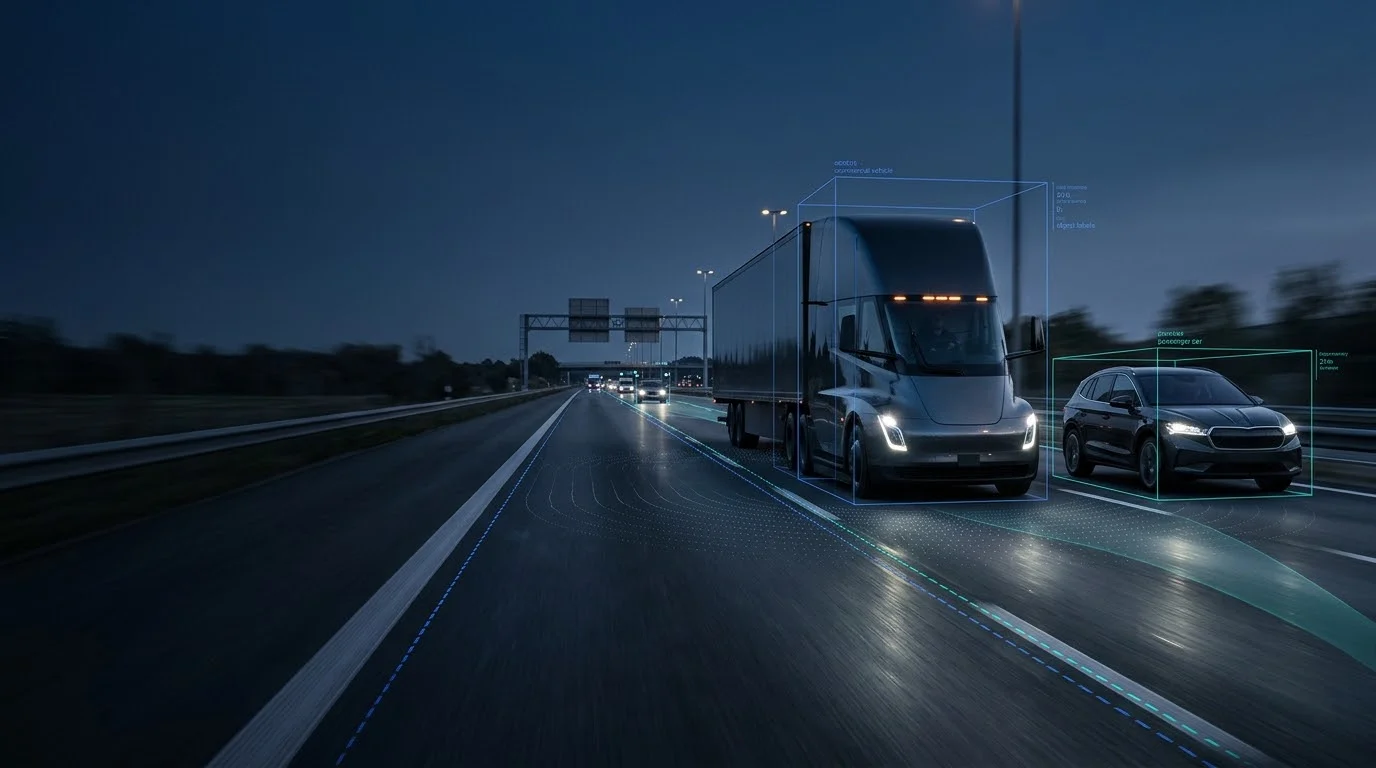
Phantom AI is an automotive artificial intelligence technology company specializing in advanced driver-assistance systems (ADAS) and autonomous-driving software. Its technology combines computer vision, sensor fusion, object tracking, and vehicle-control capabilities to help vehicles interpret their surroundings and support safer driving decisions.
What Is Phantom AI?
The company developed a modular software platform built around three main technologies: PhantomVision, PhantomFusion, and PhantomDrive. These components are designed to help vehicles recognize road users, combine information from different sensors, assess driving situations, and support functions such as automatic emergency braking and lane keeping.
An important development in the company’s history came in 2026, when commercial vehicle manufacturer Harbinger announced that it had acquired Phantom AI. Harbinger also announced a licensing agreement under which ZF would use Phantom AI’s computer-vision technology in passenger-car ADAS products. This development gives Phantom AI’s technology a broader commercial context beyond its original startup operations. Harbinger Motors
Unlike consumer-facing AI tools that generate text, images, or videos, Phantom AI focuses on automotive software. Its primary relevance is to vehicle manufacturers, automotive suppliers, and engineering teams developing intelligent driving and safety systems.
Phantom AI at a Glance
| Detail | Information |
|---|---|
| Company | Phantom AI |
| Industry | Automotive artificial intelligence |
| Main specialization | Advanced driver-assistance systems and autonomous-driving software |
| Core technologies | Computer vision, sensor fusion, object tracking, vehicle control |
| Main software components | PhantomVision, PhantomFusion, PhantomDrive |
| Target market | Automotive manufacturers and Tier 1 suppliers |
| Acquisition | Acquired by Harbinger; announced February 25, 2026 |
| Official website | phantom.ai |
How Does Phantom AI Technology Work?
Phantom AI’s technology is designed to help a vehicle understand what is happening around it. This requires more than simply identifying objects in a camera image. An automotive system must also estimate movement, interpret road conditions, assess possible hazards, and provide information that vehicle-control systems can use.
The process can be explained through four connected stages.
1. Collecting Information From Vehicle Sensors
A vehicle can use cameras, radar, LiDAR, and ultrasonic sensors to gather information about its surroundings. Each sensor provides a different type of input.
For example, cameras capture visual details such as vehicles, pedestrians, traffic lights, and lane markings. Radar can provide distance and relative-speed information, while LiDAR can contribute depth measurements. Ultrasonic sensors are commonly useful for detecting nearby objects at shorter distances.
Phantom AI’s platform is designed to work with multiple sensor types, depending on the vehicle’s configuration. Phantom AI+1
2. Recognizing Objects With Computer Vision
After collecting camera data, computer-vision software analyzes the images to identify relevant road objects and features.
These may include:
- Cars, trucks, and other vehicles
- Pedestrians
- Bicycles and cyclists
- Traffic signs and traffic lights
- Road boundaries and available driving space
This information helps the vehicle build an understanding of its immediate driving environment.
3. Combining Sensor Data and Tracking Movement
Recognizing an object is not enough. A driving system also needs to understand whether that object is stationary, approaching, moving away, or crossing the vehicle’s path.
Sensor fusion combines information from different sensors, while tracking algorithms estimate how detected objects move over time. This can help the system maintain a more consistent environmental model.
4. Assessing Risks and Supporting Vehicle Control
The final stage involves interpreting the environmental information and determining whether a driving-assistance response may be needed.
Depending on the vehicle’s hardware and software integration, this can support features such as emergency braking, adaptive cruise control, and lane-keeping assistance.
These technologies assist drivers; they do not automatically make every vehicle fully autonomous. Actual capabilities depend on the vehicle implementation and its approved operating conditions.
Title ADAS und autonomes Fahren: Überblick für Werkstätten | HELLA
hella.com
Core Technologies Behind Phantom AI
Phantom AI’s software platform is organized around three principal components. Understanding their separate roles helps explain how the overall system works.
1. PhantomVision: Computer Vision for Road Perception
PhantomVision is the computer-vision component of Phantom AI’s platform. It uses deep-learning-based image analysis to recognize objects and road features around a vehicle.
The company describes support for vehicle, pedestrian, cyclist, free-space, traffic-sign, and traffic-light detection. Its multi-camera approach is designed to combine front, side, and rear camera views to provide broader environmental coverage. Phantom AI+1
One important application is supporting advanced driver-assistance functions that depend on reliable environmental perception.
For example, an automatic emergency braking system needs to recognize a potential obstacle and provide useful information about its position and movement. Computer vision can contribute to that process by identifying objects in the vehicle’s path.
Phantom AI also describes PhantomVision as suitable for embedded automotive computing platforms. Texas Instruments lists Phantom AI’s vision software for its Jacinto processor family, providing an example of how the technology is associated with automotive hardware ecosystems. Texas Instruments+1
2. PhantomFusion: Sensor Fusion and Object Tracking
PhantomFusion is the sensor-fusion and object-tracking component.
Modern vehicles may rely on several sensors because no single sensor provides every type of information needed for all driving conditions. Sensor fusion combines these inputs to build a more comprehensive representation of the surrounding environment.
Phantom AI describes PhantomFusion as supporting camera, radar, LiDAR, and ultrasonic sensor inputs. Its platform-independent design is intended to make it adaptable to different vehicle types and sensor arrangements. Phantom AI
The practical value of sensor fusion becomes clearer in a highway scenario. A camera may identify a vehicle ahead, while radar contributes information about its distance and relative speed. The system can combine these inputs to help track the vehicle and support driving-assistance decisions.
However, sensor fusion does not guarantee that every object will always be detected correctly. Its performance depends on sensor quality, environmental conditions, calibration, and the software implementation.
3. PhantomDrive: ADAS and Vehicle Control
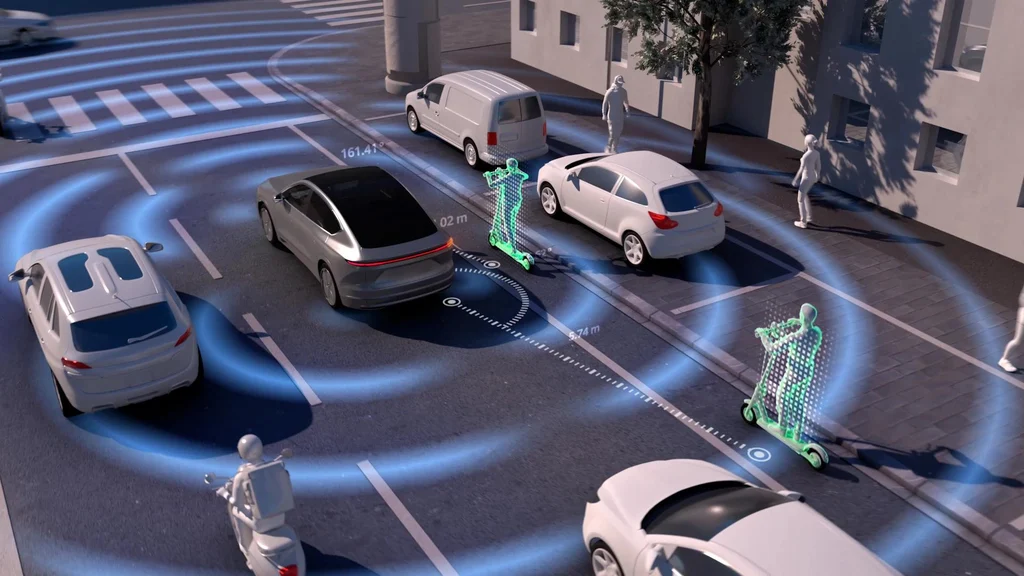
PhantomDrive is the vehicle-control component of the platform.
While PhantomVision focuses on understanding visual information and PhantomFusion combines sensor inputs, PhantomDrive is designed to use perception information to support vehicle movement.
Phantom AI describes capabilities that include:
- Adaptive cruise control
- Handling vehicles that move into the driving lane
- Automatic lane keeping
- Automatic lane changes
- Collision-risk assessment
- Acceleration, braking, and steering control
The system is designed to consider detected objects, road boundaries, and the vehicle’s current status when generating driving-control decisions. The functions available in a particular vehicle depend on its sensor configuration and map availability. Phantom AI
It is important to distinguish these capabilities from unrestricted self-driving. Features such as adaptive cruise control and lane keeping are driver-assistance functions, and their presence does not establish that a vehicle can operate autonomously in every road environment.
Important Development: Phantom AI’s Acquisition by Harbinger
One of the most significant developments in Phantom AI’s business history is its acquisition by Harbinger, an American manufacturer of medium-duty electric and hybrid commercial vehicles.
On February 25, 2026, Harbinger announced the acquisition and a separate licensing agreement with ZF Group’s passenger-car ADAS business. The announcement stated that ZF would license Phantom AI’s computer-vision technology for its passenger-car driver-assistance products. Harbinger Motors
The announcement also outlined plans to incorporate Phantom AI technology into Harbinger’s electric and hybrid commercial vehicles during 2026. The planned applications include emergency braking, adaptive cruise control, and lane keeping.
Why Is This Acquisition Important?
The acquisition matters for several reasons:
1. A wider commercial vehicle market
Harbinger manufactures medium-duty commercial vehicles. Integrating ADAS technology into these vehicles could help extend advanced safety features into a segment where such systems have historically been less common.
2. A licensing opportunity through ZF
The announced ZF agreement creates an opportunity for Phantom AI’s computer-vision technology to reach passenger-car ADAS products through an established automotive supplier.
3. Greater emphasis on practical ADAS applications
Rather than concentrating exclusively on fully autonomous vehicles, the announced applications emphasize practical safety and driver-assistance capabilities.
4. A new business context
Phantom AI should now be understood in the context of its acquisition by Harbinger, rather than described simply as an independent startup seeking automotive partnerships.
The acquisition announcement is an important company milestone, but it should not be interpreted as proof that every planned integration or product deployment has already been completed.
Main Applications of Phantom AI
Phantom AI’s software is designed for automotive applications where vehicles need to recognize road conditions, track surrounding objects, and support driving functions.
Advanced Driver-Assistance Systems
ADAS is the central application area for Phantom AI.
Its technology can support features such as automatic emergency braking, adaptive cruise control, lane-keeping assistance, and traffic-jam assistance. These systems can help drivers respond to certain hazards and manage parts of the driving process.
For example, adaptive cruise control can use information about a vehicle ahead to help maintain a selected following distance. Lane-keeping assistance can use road and lane information to help a vehicle remain within its lane.
Automatic Emergency Braking
Automatic emergency braking is designed to help reduce the risk or severity of certain front-end collisions.
A system may identify a vehicle or another obstacle in the driving path and assess whether a collision risk exists. Depending on the vehicle’s design and operating conditions, it can warn the driver or initiate braking.
Phantom AI identifies automatic emergency braking as one of the safety applications its technology is intended to support. Phantom AI+1
Lane-Keeping and Lane Support
Lane-related assistance systems use camera-based perception to identify road boundaries and lane markings.
These systems can help drivers maintain lane position and, in some implementations, provide steering assistance. Phantom AI identifies automatic lane keeping as one of the functions supported by PhantomDrive.
The actual availability and behavior of such functions depend on the vehicle’s hardware, software configuration, and operating conditions.
Adaptive Cruise Control
Adaptive cruise control helps maintain a selected speed and following distance from traffic ahead.
It relies on information about nearby vehicles, including their distance and movement. Sensor fusion and object tracking can contribute to the environmental information needed by this type of system.
Phantom AI specifically describes adaptive cruise control with cut-in vehicle handling as a PhantomDrive capability. Phantom AI
Commercial Vehicle Safety
The Harbinger acquisition creates an additional application area for Phantom AI’s technology: medium-duty electric and hybrid commercial vehicles.
Commercial fleets can benefit from safety technologies that help drivers manage traffic, monitor surrounding vehicles, and respond to potential hazards.
Harbinger announced plans to integrate Phantom AI’s ADAS technology into its vehicles, including emergency braking, adaptive cruise control, and lane keeping. These were announced plans, not a guarantee that every vehicle or feature was already available at the time of the announcement. Harbinger Motors
Benefits of Phantom AI
Phantom AI’s technology has several potential advantages for automotive manufacturers and suppliers.
1. Integrated Automotive Software
The combination of computer vision, sensor fusion, object tracking, and vehicle control offers a connected approach to ADAS development.
Instead of treating perception and control as completely unrelated tasks, the platform organizes them into components that can work together.
2. Multiple Sensor Support
The PhantomFusion architecture is designed to combine camera, radar, LiDAR, and ultrasonic information.
This can help automotive developers build systems that use the strengths of different sensors rather than depending entirely on one input source.
3. Flexible Software Architecture
Phantom AI describes its platform as modular and configurable. This is relevant to manufacturers because vehicle platforms differ in their hardware, sensor placement, processing capacity, and safety requirements.
A modular architecture can give engineering teams more flexibility when selecting and integrating software components.
4. Embedded Computing Support
PhantomVision is described as suitable for embedded automotive processors. Its listing in the Texas Instruments ecosystem provides a concrete example of its association with automotive computing hardware. Texas Instruments+1
This matters because production vehicles require systems that can perform demanding AI calculations within practical limits on processing power, energy consumption, and response time.
5. Practical Safety Applications
Phantom AI’s stated focus on technologies such as automatic emergency braking and lane support reflects the importance of developing useful safety functions before attempting more complex forms of automation.
6. Commercial Opportunities Through Harbinger and ZF
The Harbinger acquisition and announced ZF licensing agreement provide a significant commercial development for the technology.
They also create potential opportunities for wider integration into commercial and passenger vehicles. Harbinger Motors
Limitations and Challenges of Phantom AI
Although Phantom AI’s technology addresses important automotive needs, its capabilities should be evaluated realistically.
1. Performance Depends on Sensors and Hardware
The performance of an ADAS platform depends on the quality and configuration of the cameras, radar, LiDAR, computing hardware, and other vehicle components.
A software platform cannot overcome every limitation of an unsuitable or poorly calibrated sensor system.
2. Unpredictable Road Conditions
Real-world roads present difficult situations, including heavy rain, fog, poor lighting, unusual road markings, construction zones, and unexpected pedestrian movements.
AI perception systems must be extensively tested against such conditions. No computer-vision system should be assumed to recognize every possible road hazard.
3. Complex Automotive Integration
Automotive software must work with a vehicle’s electronic architecture, sensors, braking systems, steering systems, and other control components.
Manufacturers also need extensive validation and safety testing before deploying driver-assistance functions in production vehicles.
4. Driver Supervision Remains Important
ADAS technologies are not automatically equivalent to fully autonomous driving.
Drivers must understand the limitations of their vehicle’s assistance systems and follow the manufacturer’s instructions. A system’s ability to control steering or braking in certain situations does not mean that the driver can stop paying attention.
5. Limited Public Pricing Information
Phantom AI’s website does not provide a standard consumer subscription price or a public pricing table for its automotive software.
Because the technology is aimed at automotive manufacturers and suppliers, commercial terms are likely to depend on licensing, hardware integration, selected components, and project requirements. Specific prices should be requested from the company.
6. Independent Performance Evidence Is Important
The company describes its technology as accurate, efficient, and suitable for automotive applications. However, product descriptions alone do not establish that it outperforms every competing platform.
Automotive buyers should assess independent test results, safety validation, production deployments, and vehicle-specific performance before making purchasing decisions.
Phantom AI Pricing: Is It Free?
Phantom AI is not a conventional consumer application that offers a free plan and paid monthly subscriptions.
Its business model is focused on automotive manufacturers and Tier 1 suppliers that need software for vehicle development and integration.
| Pricing factor | Publicly available information |
|---|---|
| Free consumer plan | Not listed |
| Monthly subscription | No standard public price listed |
| Enterprise licensing | Contact the company |
| Software integration | Project-dependent |
| Hardware requirements | Depends on the vehicle implementation |
| Target customers | Automotive manufacturers and Tier 1 suppliers |
The commercial cost may depend on the selected components, vehicle platform, hardware requirements, licensing agreement, and engineering support.
For accurate commercial information, visit the official Phantom AI website.
Phantom AI vs. Traditional ADAS Technology
Traditional ADAS products use sensors and software to support functions such as emergency braking, cruise control, and lane assistance.
Phantom AI’s approach combines deep-learning-based computer vision, sensor fusion, object tracking, and vehicle control in a modular software platform.
| Comparison area | Traditional ADAS systems | Phantom AI’s approach |
|---|---|---|
| Environmental perception | Depends on the system’s sensors and algorithms | Deep-learning-based computer vision |
| Sensor inputs | Varies by product | Camera, radar, LiDAR, and ultrasonic support |
| Object tracking | Implementation-dependent | Dedicated sensor-fusion and tracking component |
| Vehicle control | Depends on the vehicle architecture | Dedicated PhantomDrive component |
| Software configuration | Manufacturer-dependent | Modular and configurable |
| Main application | Driver assistance and safety | Driver assistance and autonomous-driving development |
This comparison describes differences in approach, not independently verified performance superiority. Traditional ADAS products also vary considerably, and many already use AI-based perception and sensor fusion.
Phantom AI vs. Other Automotive AI Companies
Phantom AI operates in a competitive industry that includes companies developing computer vision, autonomous-driving software, sensor technology, and complete vehicle platforms.
Some relevant industry participants include:
- Mobileye: Develops computer vision, driver-assistance technology, and autonomous-driving systems.
- NVIDIA: Provides computing platforms and software technologies for autonomous vehicles and automotive AI development.
- Qualcomm: Develops automotive computing and connectivity platforms, including technologies for advanced driver assistance.
- Bosch: Supplies automotive systems and technologies, including driver-assistance and vehicle-safety solutions.
The companies do not all sell directly comparable products. Some offer broader hardware and software ecosystems, while others specialize in particular components or vehicle platforms.
Phantom AI’s distinctive positioning is its modular software stack and its focus on combining perception, sensor fusion, and vehicle control capabilities.
Who Can Benefit From Phantom AI?
Phantom AI is most relevant to organizations developing or integrating automotive technology.
Automotive manufacturers: Companies that want to incorporate advanced driver assistance functions into passenger or commercial vehicles.
Tier 1 automotive suppliers: Businesses that supply electronic systems and software to vehicle manufacturers.
Commercial fleet manufacturers: Companies interested in adding safety and assistance capabilities to trucks and other commercial vehicles.
Automotive software engineers: Developers working with computer vision, object detection, sensor fusion, and vehicle-control software.
Autonomous-driving researchers: Teams studying environmental perception, real-time AI processing, and vehicle automation.
For ordinary consumers, Phantom AI is not primarily a downloadable chatbot or image-generation application. Its technology is intended to be integrated into automotive products.
Privacy and Data Protection
Privacy is an important consideration in automotive AI because vehicles can collect video and sensor information from public roads.
Phantom AI’s published privacy policy explains that its development vehicles collect video of surrounding traffic environments for training driver-assistance algorithms. The recorded information may include vehicles, pedestrians, cyclists, traffic signs, traffic lights, and road markings. Phantom AI
The policy states that the company does not intend to identify individuals or vehicle registrations and describes data-retention practices and rights available under applicable privacy regulations.
However, road video can sometimes capture identifiable information, even when identification is not the purpose of collection. Organizations working with automotive video data should therefore consider privacy safeguards, access controls, retention limits, and applicable data-protection laws.
For the most accurate information, review the company’s official privacy policy.
The Future of Phantom AI and Automotive Artificial Intelligence
The automotive industry is moving toward vehicles with increasingly capable driver-assistance systems, more sophisticated environmental perception, and greater levels of automation.
AI plays an important role in this development because vehicles must interpret complex environments and respond to changing traffic conditions in real time.
Phantom AI’s technology reflects three important areas of this progress:
- Computer vision: Helping vehicles recognize road users, traffic signs, and driving environments.
- Sensor fusion: Combining different sensor inputs to create a more complete environmental model.
- Vehicle control: Using perception information to support braking, steering, acceleration, and other driving functions.
The Harbinger acquisition and ZF licensing announcement add a commercial dimension to this development. They indicate plans to use Phantom AI technology in both commercial and passenger-vehicle applications. Harbinger Motors
The next important questions concern the scale of deployment, real-world performance, safety validation, and the ability to integrate the technology across different vehicle platforms.
Ultimately, the value of automotive AI will depend not simply on how advanced its algorithms appear, but on how reliably they work in real driving environments.
FAQs
1. What is Phantom AI used for?
Phantom AI develops automotive AI software for advanced driver assistance systems and autonomous driving applications. Its technology supports computer vision, sensor fusion, object tracking, and vehicle control functions.
2. What are the main products of Phantom AI?
Its main software components are PhantomVision, PhantomFusion, and PhantomDrive. PhantomVision handles computer vision, PhantomFusion combines sensor information and tracks objects, and PhantomDrive supports vehicle control functions.
3. Was Phantom AI acquired by Harbinger?
Yes. Harbinger announced its acquisition of Phantom AI on February 25, 2026. The announcement also included a licensing agreement for ZF to use Phantom AI’s computer vision in passenger car ADAS products. Harbinger Motors
4. What is PhantomVision?
PhantomVision is a deep-learning-based computer vision system designed to recognize vehicles, pedestrians, cyclists, free space, traffic signs, and traffic lights around a vehicle.
5. What is PhantomFusion?
PhantomFusion is a sensor fusion and object tracking system designed to combine information from cameras, radar, LiDAR, and ultrasonic sensors.
6. What is PhantomDrive?
PhantomDrive is Phantom AI’s vehicle control technology. It is designed to support functions such as adaptive cruise control, automatic lane keeping, and automatic lane changes, depending on vehicle configuration.
7. Is Phantom AI a fully autonomous driving system?
Phantom AI develops software for ADAS and autonomous driving applications. Its platform includes Level 2 and Level 3 solutions, according to the company, but that does not mean every vehicle using its technology can drive without human supervision.
8. Is Phantom AI free?
Phantom AI does not list a standard free consumer plan. Its software is intended primarily for automotive manufacturers and suppliers, and commercial pricing is not publicly specified.
9. Who are Phantom AI’s customers?
The company identifies automotive manufacturers and Tier 1 suppliers as its main customer groups. The Harbinger acquisition and announced ZF licensing agreement also provide examples of its automotive commercial relationships.
10. What makes Phantom AI different from other automotive AI companies?
Phantom AI emphasizes a modular software platform that combines computer vision, sensor fusion, object tracking, and vehicle control. Its technology is designed for integration into automotive systems rather than being a general-purpose consumer AI application.
Conclusion
Phantom AI is an automotive artificial intelligence technology company focused on advanced driver-assistance systems and autonomous-driving software. Its platform combines PhantomVision for computer vision, PhantomFusion for sensor fusion and object tracking, and PhantomDrive for vehicle-control capabilities.
The company’s technology is designed to support practical driving functions, including automatic emergency braking, adaptive cruise control, and lane keeping. Its modular architecture also makes it relevant to automotive manufacturers and suppliers developing intelligent vehicle platforms.
The acquisition by Harbinger and the announced licensing agreement with ZF are important developments that strengthen the commercial context of Phantom AI’s technology. They also create opportunities for its software to be used across passenger and commercial vehicle applications.
Nevertheless, automotive AI must meet demanding requirements for reliability, safety, and real-world performance. Phantom AI’s long-term significance will depend on successful integration, validated deployments, and its ability to deliver dependable driver-assistance technology.
For readers following the development of artificial intelligence in transportation, Phantom AI is an important company to understand not because it offers a consumer AI tool, but because it illustrates how AI software is becoming part of modern vehicle engineering.